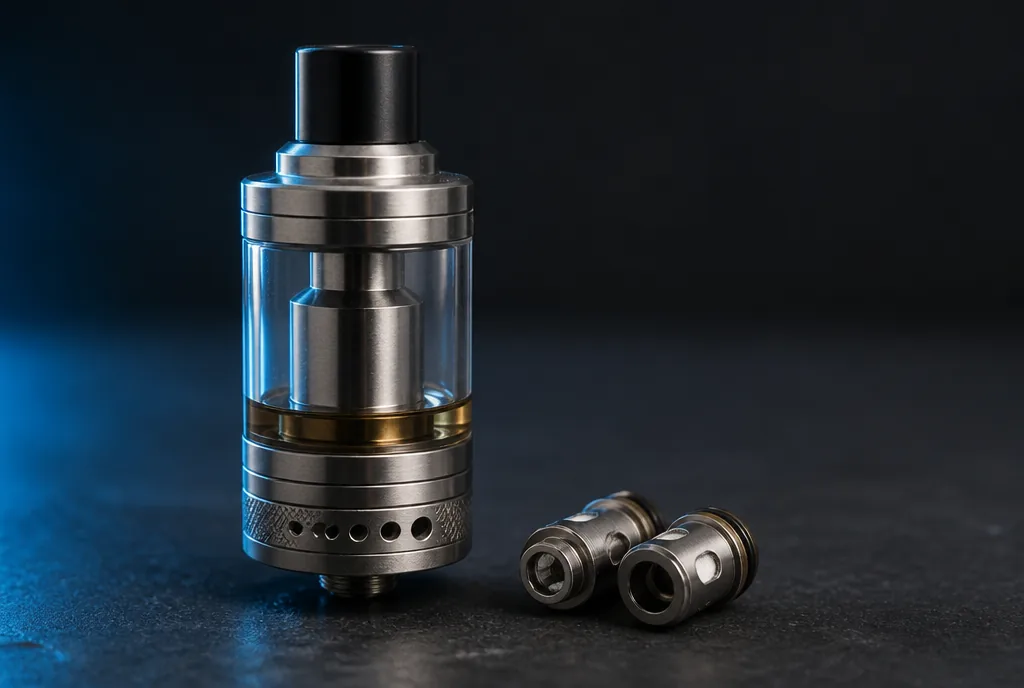
How to inhale vape properly, a symptom-by-symptom guide
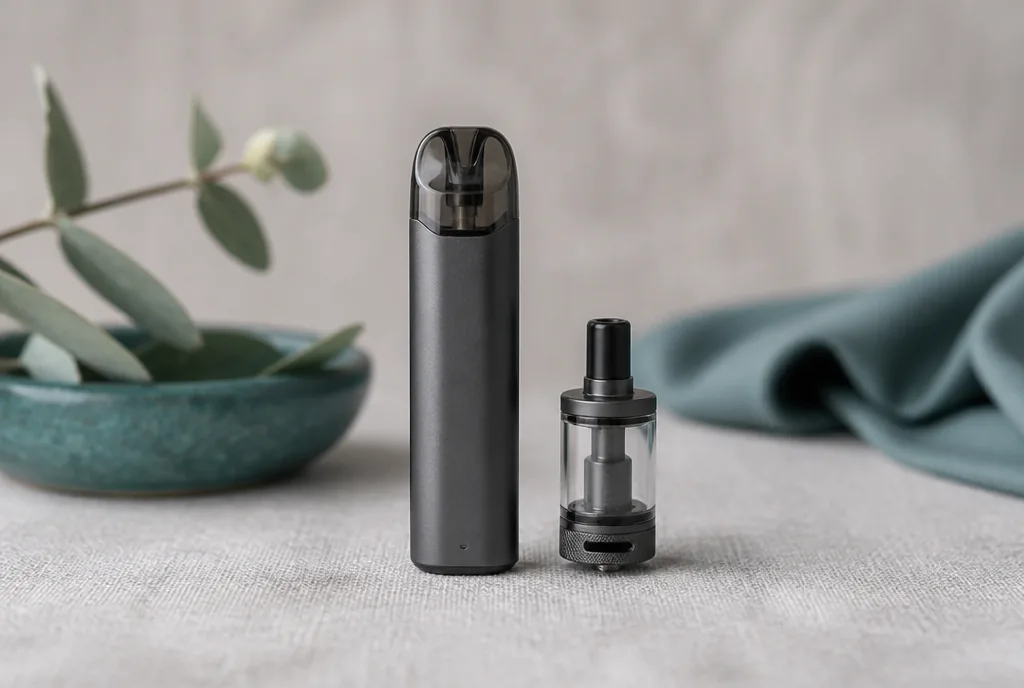
The vapour goes in, sits behind your teeth for a moment, then comes back out almost as thick as it arrived. The pattern has a name, mouth puffing, and it rarely has a single cause. Learning how to inhale vape properly therefore works like troubleshooting, starting from the symptom you notice, tracing it back to what keeps the vapour in your mouth, and fixing one thing at a time.
How to inhale vape properly, the short answer
Three sources share the problem, your technique, the airflow and coil pairing, and finally the wattage and the e-liquid. Knowing how to inhale vape properly means using the symptom to find which one is at fault, then correcting that one alone without touching the rest.
Changing several settings at once muddies the result. If the puff improves, you cannot tell what helped, and if it gets worse, you cannot tell what to undo. The method comes down to one principle, one test, one variable.
Mouth puffing, what the term means
Mouth puffing describes vapour that is drawn into the mouth and let straight back out, without carrying on any further. Among vapers it simply names the puff that stops behind the teeth.
It is not strictly a mistake. Some vapers hold vapour in their mouth on purpose to focus on the flavour. It becomes a problem when it happens against your will, because the technique or the settings stop you getting the sensation you were after.
The diagnostic table, from symptom to fix
Each case generally gives itself away through a detail you can spot while drawing or breathing out. The table links that sign to its likely cause and to the fix worth trying first.
| Symptom | Likely cause | Fix to try |
|---|---|---|
| Exhaled vapour as thick as on the draw | The vapour never left your mouth | Make the second step, the breath in after the puff, deliberate |
| No throat sensation, only taste on the tongue | Puff released before breathing in | Keep your lips sealed on the mouthpiece until you breathe in |
| Draw so stiff you give up breathing in | Airflow too closed for the chosen style | Open the airflow by one notch |
| Weak, lukewarm puff on a long draw | High-resistance coil used with an open-draw technique | Switch to a sub-ohm coil and open airflow |
| Hot, harsh vapour you want to blow out | Wattage above the coil’s range | Drop back into the range printed on the coil |
| Sharp throat hit from the first second | High nicotine strength with a lot of vapour | Tighten the draw or review the strength |
When two rows match at once, the kit and the technique are probably not aimed at the same style. It is better to check that point before fixing details one by one.
The process of elimination, one setting at a time
The table points the way, elimination confirms it. The four checks below run from the quickest to the longest, and each one is judged over a few puffs before moving on to the next.
First check, the coil
A new coil that has not soaked properly gives weak, dry vapour that you blow out by reflex. Before any other change, make sure the cotton has had time to soak after filling, and that an older coil is not already tasting burnt.
Second check, the airflow
Move it by a single notch, in the direction the table suggests, then draw again. One notch can be enough to make breathing in possible on a stiff draw, or to give body back to a thin puff. Adjusting it step by step is covered in our guide to vape airflow settings.
Third check, the wattage
Go back to the bottom of the range printed on the coil, then go up one watt at a time. Harsh vapour above that range makes you want to blow it out, whatever your technique.
Fourth check, the technique
If the puff still stays in your mouth on a correctly set device, the cause lies in the technique. The mistakes described below can be fixed without changing anything on the device.
Three technique mistakes behind mouth puffing
When the device is set up well, mouth puffing generally comes down to how you draw. Three mistakes stand out, and each one has its own fix.
A puff that is too short
A one-second draw barely gives the coil time to heat. Your mouth fills with a little air and not much vapour, which you blow out by reflex. On a tight draw, a slow pull of two to three seconds gives a puff that is big enough to carry into the second step.
Letting the vapour go before breathing in
This is a typical error with mouth-to-lung vaping. You open your mouth after the puff, part of the vapour escapes and the second step finds almost nothing. The right action is to take your lips off the mouthpiece and breathe in straight away, with no pause.
Forcing the draw on a device that is too tight
Pulling as hard as you can on a pod built for MTL does not turn the puff into direct-to-lung. You mostly get thin vapour and an awkward draw that makes you want to blow everything out. Our comparison of MTL vs DTL vaping helps you check which technique the device expects.
Inhaling style, the check that remains
When neither the settings nor the technique explain the problem, the style itself probably does not match the device. A pod with a coil above 1 ohm and tight airflow calls for a two-step action, described in detail in our guide to MTL vaping and the tight draw. Kit below 1 ohm with open airflow calls for a full breath in, in a single movement.
In between, restricted direct-to-lung still slows the air while being taken in one go. A vaper coming from MTL may keep the two-step action here, and the larger puff then stays in the mouth.
Related reading
- MTL vs DTL vaping, choosing your style
- MTL vaping and the tight draw
- Vape airflow settings explained
- RDL vaping, restricted direct to lung
FAQ
Five questions that come up once the diagnosis is made, about the kit, the e-liquid and how long the fix takes to show.
Do you need a new device if you keep mouth puffing?
Rarely as a first step. The table points first to the coil, the airflow, the wattage and the technique. Changing kit mainly makes sense when the style you want does not match the one the device was designed for.
Can mouth puffing come from a flooded pod?
Yes. E-liquid rising into the mouthpiece gives spitback in the mouth, which you blow out by reflex. Checking the fill level and the state of the coil can settle this case before any question of technique.
Does nicotine strength affect the urge to puff?
Yes, indirectly. A hit that is too sharp makes you want to hold the vapour in your mouth. Matching the strength to the draw style, lower on direct-to-lung than on a tight draw, makes the action smoother. In the UK, nicotine e-liquid is capped at 20 mg/ml and sold in bottles of no more than 10 ml, and refillable tanks are limited to 2 ml.
Do nicotine salt e-liquids change the technique?
They mainly change the sensation. Nicotine salts are designed for a smoother hit at the same strength, which makes the second step easier on a tight draw. They are meant for MTL devices and pods rather than airy setups that produce a lot of vapour.
How do you know the problem is solved?
The vapour you breathe out becomes clearly less dense than the puff you drew, and the throat sensation arrives without effort. If both signs hold over several puffs in a row, the last setting you changed was the right one.
How to inhale vape properly, settings as much as technique
Unwanted mouth puffing can be diagnosed like a fault. The symptom tells you where to look, and elimination, one setting at a time, confirms the cause, from a coil that has not soaked to a two-step action released too early.
Knowing how to inhale vape properly rarely comes down to fixing one thing. Inhaling style, device settings and technique work as a whole, and that fit is what we keep exploring across every way of inhaling.
Editorial content for adult readers only. Vaping products can contain nicotine, a substance that causes addiction. Nicotine vaping products are not for sale to anyone under 18 in the UK. This article is not a buying recommendation.
Keep reading
Vape airflow: how to set your draw properly
Vape airflow explained: find the right draw, fix a pull that is too tight or too open, and use the one lever UK rules leave fully in your hands.

Geekvape Aegis, which Aegis for which draw
Geekvape Aegis, from the Legend 5 to the Nano 3. Six models sorted by inhaling style, MTL, RDL or DTL, and the coils that actually set the draw.
Nautilus GT, GT Mini or GT II, setting the draw from MTL to RDL
Nautilus GT, GT Mini or GT II. A five-hole airflow ring, BVC or mesh coils and wattage, and how each version sets the draw from MTL to RDL.