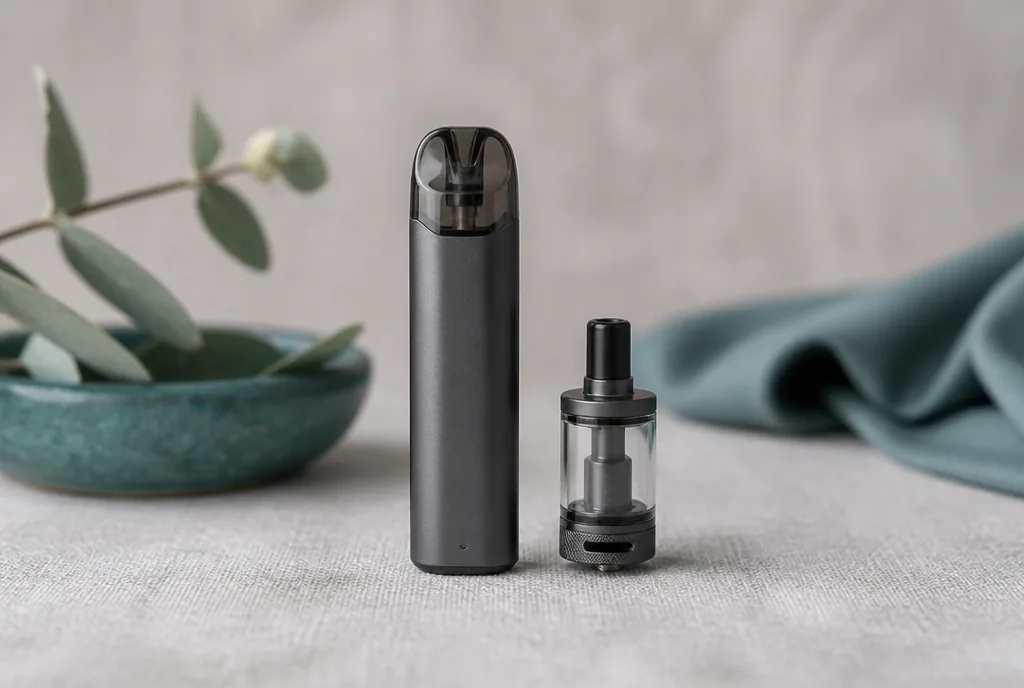
RDL vaping: restricted direct to lung explained
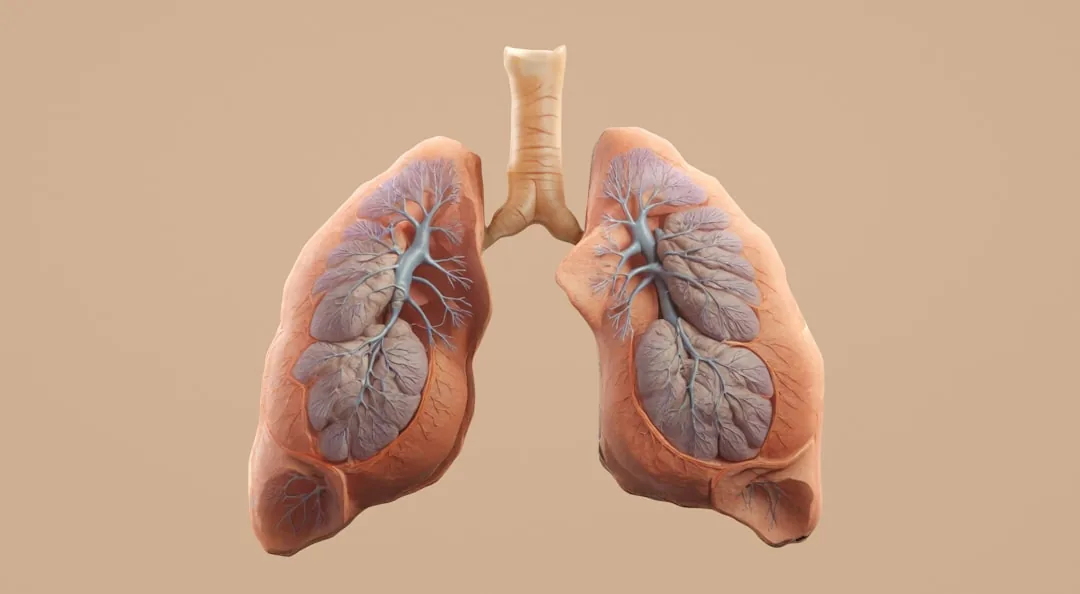
Between a tight draw that mimics a cigarette and an open one that fills a room with vapour, a great many British vapers find neither fits. A third register grew up for them, and for years it lived in the footnotes of comparison guides. RDL vaping is now printed on product listings across every major UK retailer, usually without anyone explaining what it means. Understanding it changes how you read a spec sheet.
RDL vaping in one definition
RDL stands for restricted direct to lung. Plenty of British shops write it RDTL, restricted direct to lung spelled out more fully, and the two acronyms mean exactly the same thing. You will see both on the same shelf.
The vapour goes straight down to the lungs, as it does in DTL, but through deliberately narrowed airflow. The gesture stays single stage, with no pause in the mouth, yet the tighter inlet softens the pull and cuts the volume produced.
The result is a direct inhale that is warmer, denser in flavour and considerably less demanding than a fully open one. It is not a halfway house made of compromises, it is a setting in its own right, and it has become the default position on a great many adjustable kits.
What RDL vaping offers that the other two do not
The restricted direct draw has qualities its neighbours cannot deliver, which is what explains its steady rise in the UK.
A wide open DTL build pushes a large volume of air through the coil, and a good number of people find that brutal rather than pleasant. Narrowing the inlet keeps the direct gesture while taming the amplitude. Vapour arrives gently, warmer and less diluted, and flavour holds together instead of being spread thin across a big draw.
There is also a point about nicotine that rarely gets made. A fully open build delivers a great deal of nicotine per puff because of the sheer volume, which pushes strengths right down. Reducing the vaporised volume lets an RDL setup sit at a mid range strength rather than at the floor.
That single technical detail explains most of the style’s appeal. It offers the direct gesture without forcing you to the bottom of the strength scale, which matters a lot in a market where every bottle is capped at the same ceiling anyway.
The hardware for RDL vaping
The style rests on a precise balance between coil and air inlet. Open the ring too far and you slide into DTL, close it too far and you are back at a tight draw with a coil that is not built for it.
Restricted direct to lung generally runs on coils sitting near the 1 ohm threshold, roughly from 0.6 ohm upwards, paired with an intermediate wattage taken from the range printed on the coil itself. The airflow ring sits in a middle position, neither pinched nor wide open.
Many recent kits advertise RDL compatibility outright and ship with dedicated coils, recognisable by that resistance band. Some list a coil as MTL and RDL together, which usually means the airflow ring covers both registers rather than the coil doing anything clever.
The liquid sits in the middle too. A balanced PG and VG mix is thin enough to wick into a coil near 1 ohm and thick enough to carry a decent vapour. Push the vegetable glycerine too high and the wick starves, push the propylene glycol too high and the vapour thins out.
Why RDL vaping fits the British setup so well
The UK frame does something unusual to this style, and it works in its favour. Refillable tanks and pods are capped at 2 ml, nicotine containing e-liquid at 20 mg per ml, and bottles of that liquid at 10 ml.
Under a 2 ml ceiling, a fully open direct to lung build is a refilling job. The coil converts liquid quickly, the tank cannot be made bigger, and the day turns into a sequence of top ups. That is the practical objection to DTL in Britain, and it has nothing to do with how the vapour feels.
Restricting the airflow cuts consumption sharply while keeping the direct gesture, which brings a 2 ml tank back into the realm of the usable. At the same time the reduced volume lets you sit further up the strength scale than an open build would allow, without approaching the legal cap.
The consequence is visible in the shops. British kits increasingly ship with a wide airflow range and a coil selection that stops around the RDL band, because that is the configuration that actually survives contact with the rules. For the wider comparison between the two ends of the scale, our guide to MTL vs DTL sets out the framework.
Who restricted direct to lung is for
RDL vaping answers expectations that neither of its neighbours meets on its own, and recognising that profile is the quickest way to know whether it is yours.
It suits the vaper who finds a tight draw too discreet but an open one too voluminous, who wants the single stage inhale without the cloud, and who would rather keep a mid range strength than drop to the bottom of the scale. It also suits anyone who values warmth and flavour density over sheer output.
It works as a transition ground as well. Vapers coming from a tight draw often find the direct gesture easier to learn through a restricted inlet, and our guide to switching from MTL to DTL treats it as the natural intermediate step.
On a kit with an adjustable ring, exploring the register costs nothing. Close the airflow down, take a few slow draws, then open it a notch at a time, a method our guide to vape airflow settings sets out in detail. RDL vaping is not a fallback position, it is a deliberate balance between comfort and volume.
Frequently asked questions
Are RDL and RDTL the same thing?
Yes. RDL is restricted direct lung, RDTL is restricted direct to lung, and both describe a direct inhale through narrowed airflow. British product listings use one or the other with no difference in meaning, so treat them as interchangeable when you compare kits.
Which coil resistance suits this style?
Coils sitting near the 1 ohm threshold, commonly from around 0.6 ohm upwards, paired with a wattage taken from the range printed on the coil. Lower resistances pull towards a fully open build, higher ones back towards a tight draw. The coil is the honest indicator, not the marketing on the box.
Can I get there with an MTL kit?
Not convincingly. Hardware built for restriction keeps its inlets too narrow and its coils too high in resistance. Some versatile kits with a wide airflow range and a broad coil selection do cover the register, but a device that advertises the style outright is the more reliable choice.
Does it get through a lot of e-liquid?
It sits between the two. More than a tight draw, considerably less than a fully open build. Under the 2 ml tank rule that difference is felt every day, which is a large part of why the style has taken hold in Britain.
Is it suitable for someone new to vaping?
It can suit anyone curious about the direct gesture, provided the hardware matches and the strength is chosen sensibly against the vapour volume produced. Many people reach it after starting on a tight draw, but nothing obliges you to take that route.
A third style that deserves better than a footnote
Restricted direct to lung occupies a genuine space of its own. It offers the direct gesture without the amplitude of a fully open build, a more workable strength than an open setup allows, and hardware that sits comfortably around the 1 ohm mark.
In the United Kingdom it also happens to be the configuration best matched to the constraints, since a 2 ml tank and a capped bottle size make an unrestricted build hard work in daily use. Long dismissed as an in between setting, RDL vaping deserves to be read as a complete style with its own profile and its own adjustments.
That range of ways to inhale, from the tightest draw to the most open, is what Panorama Inhalation keeps mapping, kit after kit.
Editorial content for adult readers only. Vaping products usually contain nicotine, a substance that causes addiction. Not for sale to under-18s in the United Kingdom. This article is not a buying recommendation.
Keep reading
Switching from MTL to DTL: the method
Switching from MTL to DTL without a false start: hardware, coils, airflow, e-liquid and the UK shortfill habit that comes with the change.
Geekvape Aegis, which Aegis for which draw
Geekvape Aegis, from the Legend 5 to the Nano 3. Six models sorted by inhaling style, MTL, RDL or DTL, and the coils that actually set the draw.
How to inhale vape properly, a symptom-by-symptom guide
How to inhale vape properly, from symptom to fix. A diagnostic table and a process of elimination that changes one setting at a time.