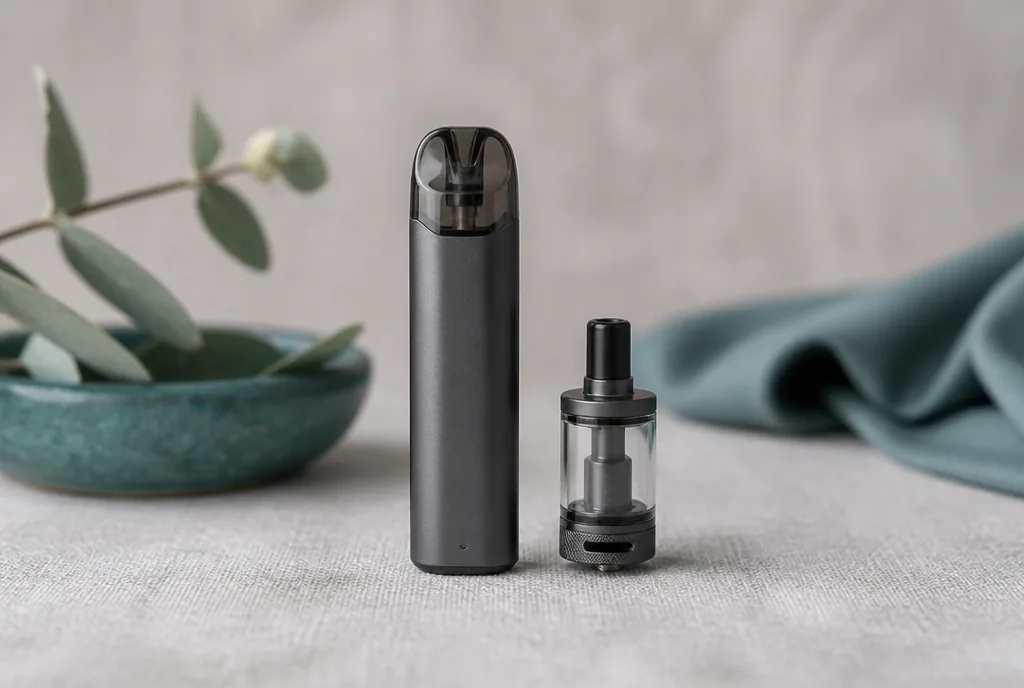
MTL vs DTL: how to choose your vaping style
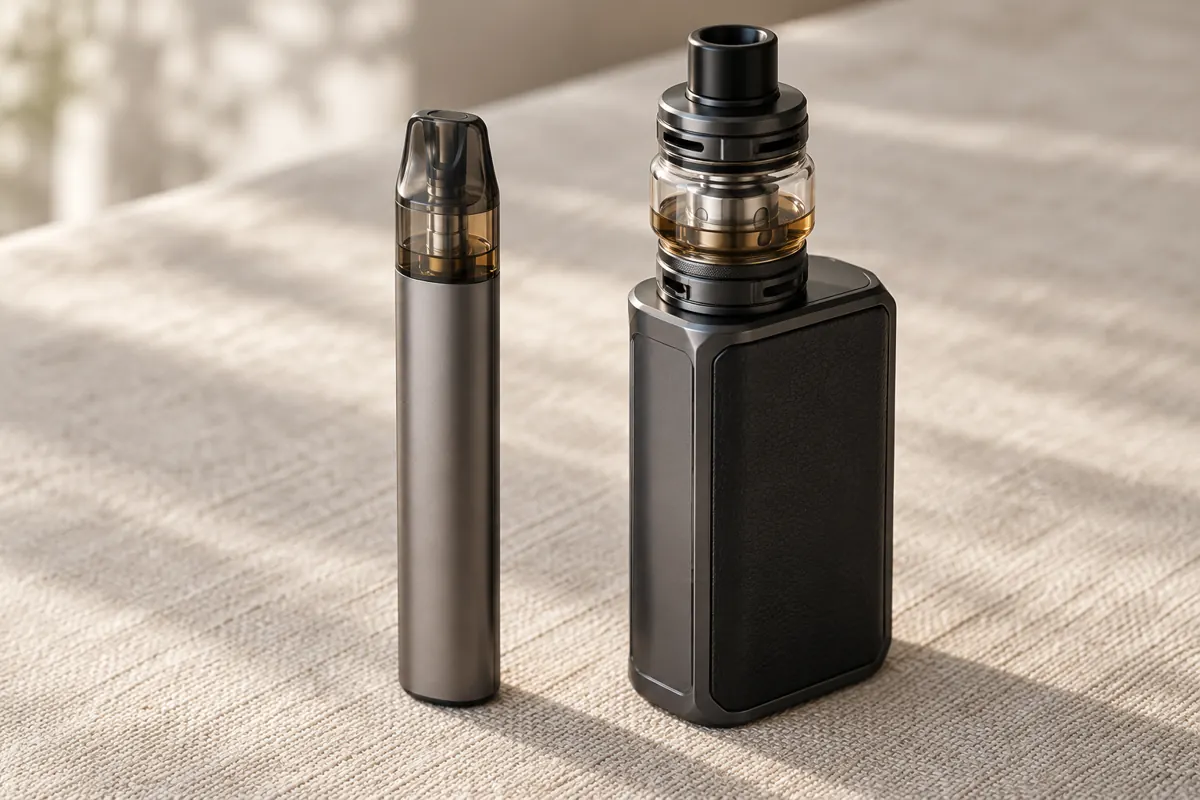
Stand in front of the wall of kit in any British vape shop and one question comes before flavour, before brand, before anything. Do you draw the vapour into your mouth first, or straight down into your lungs? The choice of MTL vs DTL sets everything that follows, from the coil to the e-liquid to the way the airflow ring is left sitting. Plenty of people settle it by accident and reverse the decision a fortnight later.
MTL vs DTL: the difference in one sentence
MTL, short for mouth to lung, means pulling vapour into the mouth, holding it for a beat, then inhaling it. DTL, short for direct to lung, takes the vapour down in a single movement, the way you would take a deep breath. Everything else follows from that one gesture.
Coil resistance, wattage, airflow and the make up of the liquid all fall into place once the gesture is fixed. Deciding MTL vs DTL therefore means choosing a sensation first and hardware second, which is the opposite of how most buying guides are written.
Note the spelling while we are here. British shops and British vapers write DTL, not DL, and the abbreviation you will see on product listings is almost always the three letter one. Getting the vocabulary right makes the rest of the research far easier.
What really separates the two styles
Beyond the gesture, each style forms a coherent set where hardware and liquid answer to each other. Mixing components from one column with components from the other is what produces an uncomfortable vape.
MTL is built around a tight draw and a defined throat hit, the small catch at the back of the throat that so many people are looking for. DTL opens the draw right up, softens that hit and puts the emphasis on vapour volume and flavour spread instead.
Someone who wants discretion, a small device in a coat pocket and a familiar sensation is describing MTL without knowing it. Someone who wants a cloud, a wide open draw and a generous aromatic delivery is describing DTL. Neither is more advanced than the other.
Where the coil draws the line
This is the point at which the split becomes technical rather than descriptive. Coil resistance is the most reliable marker available, more reliable than the marketing copy on the box.
Above 1 ohm you are in MTL territory, on modest wattage, with a coil that heats gently and produces a warm, concentrated vapour. Below 1 ohm the build tips towards DTL, with low resistance coils that ask for far more power and a battery that can sustain it. British listings often stretch the MTL band down towards 0.8 ohm, which is worth knowing when you read a product page.
That 1 ohm threshold is the real boundary in the MTL vs DTL question. A kit sold as versatile can straddle it, but a coil cannot lie about what it was designed to do.
E-liquid, nicotine and the British 2 ml rule
The liquid is not an afterthought. MTL suits a thinner liquid, richer in propylene glycol, which feeds small coils well and sharpens the throat hit. DTL asks for a thicker base loaded with vegetable glycerine to feed the vapour.
Nicotine follows the same logic in reverse. A large volume of vapour carries far more nicotine per puff, so DTL vapers work at the low end of the scale, while MTL vapers, taking measured puffs, tend towards the higher end. Nic salts, formulated for a smoother delivery at strength, sit naturally on the MTL side of the shelf.
Here the United Kingdom adds a structural twist that does not exist everywhere. Refillable tanks and pods are capped at 2 ml, nicotine containing e-liquid is capped at 20 mg per ml, and bottles of nicotine containing liquid are capped at 10 ml. Those three ceilings all pull in the same direction.
A 2 ml tank emptied by a low resistance coil is a tank you refill constantly, which makes DTL a chore on the move. The same 2 ml on an MTL coil lasts most of a working day. Meanwhile the 20 mg per ml ceiling is generous enough to matter at MTL puff volumes and far less useful at DTL volumes, where such a strength would simply be unpleasant. The result is a national market tilted towards the tight draw by regulation rather than by taste.
MTL vs DTL at a glance
The table below gathers the markers that matter when you are comparing two kits on a shop shelf and want the answer quickly.
| Criterion | MTL, mouth to lung | DTL, direct to lung |
|---|---|---|
| Gesture | Two stages, mouth then lungs | One stage, straight to the lungs |
| Draw | Tight | Airy |
| Coil | Above 1 ohm | Below 1 ohm |
| Wattage | Modest | High |
| E-liquid | PG heavy, thinner | VG heavy, thicker |
| Nicotine | Higher end of the scale | Lower end of the scale |
| Vapour | Discreet | Abundant |
| 2 ml tank lasts | Most of a day | A fraction of a day |
The middle ground: RDL and RDTL
The line between the two styles is less clean than a table suggests. A third register has settled in for people who find the tight draw stifling and the open one excessive.
That compromise is RDL, restricted direct to lung, also written RDTL on plenty of British listings. The inhale goes straight to the lungs, but through deliberately narrowed airflow, which tempers the volume and keeps some warmth and flavour density. Our guide to RDL and RDTL vaping sets out the coils and settings it runs on.
Most recent kits ship with an adjustable airflow ring that lets you slide between registers on one device, which blurs the boundary further. That is a genuine convenience, and it is also why so many people cannot say which style they actually vape.
Which style suits which vaper
Neither style is superior in the abstract. The right answer depends on how the device is used across a real day, not on a level to be reached.
MTL suits the vaper who wants a familiar sensation, contained liquid consumption and compact hardware, and it is the natural home of the small refillable pod that dominates British shops. The tight draw is explored in detail in our MTL vaping guide.
DTL suits the vaper who wants volume, a wide draw and generous flavour, and who accepts faster liquid use and heavier battery drain in exchange. If you already vape MTL and want to move across, the sequence matters, and our guide to switching from MTL to DTL works through it step by step.
Frequently asked questions
Is DTL only for experienced vapers?
No. Time served does not determine style. Someone who has vaped for a month can vape DTL if the hardware suits and the liquid is a VG heavy base, and a vaper of ten years may stay on a tight draw for the discretion. It is a preference, not a rank.
Can one device do both styles properly?
Versatile kits with an adjustable airflow ring and a choice of coils cover a wide band, which is enough to explore. They rarely reach the extremes of either style. For a genuinely committed setup at one end or the other, dedicated hardware is more convincing.
Why does DTL get through so much more e-liquid?
Because it vaporises more with every puff. Low resistance coils and high wattage convert far more liquid into vapour, and a 2 ml tank empties accordingly. That is the price of the cloud, and in the UK it is felt sharply because the tank cannot be made bigger.
Does nicotine strength change with the style?
Yes, and it is one of the most common mistakes. DTL delivers far more nicotine per puff because of the vapour volume, so strengths sit low. MTL puffs are measured, so strengths sit higher. Carrying an MTL strength across to a DTL setup usually feels far too harsh.
Does a tight draw wear the coil out faster?
Not usually. An MTL coil runs at lower power and vaporises less, which tends to spare it. Heavily sweetened liquids and wattage set outside the range printed on the coil are what shorten coil life, whichever style you vape.
Finding the style that actually fits you
The MTL vs DTL debate has no universal winner. It sets two sensations against each other, one close to the familiar two stage draw, the other built around volume, and each is served by its own coils, its own liquid and its own settings.
Start from the gesture you want rather than the kit that is being pushed this month, and the coil resistance, the wattage and the strength all fall out of that first decision. In Britain the regulatory frame quietly leans the whole market one way, which is worth factoring in before you spend anything.
That is the logic Panorama Inhalation applies across every kit we look at: gesture first, settings second, and the honest admission that MTL vs DTL is a question of what you want a vape to feel like, not a ladder to climb.
Editorial content for adult readers only. Vaping products usually contain nicotine, a substance that causes addiction. Not for sale to under-18s in the United Kingdom. This article is not a buying recommendation.
Keep reading
Geekvape Aegis, which Aegis for which draw
Geekvape Aegis, from the Legend 5 to the Nano 3. Six models sorted by inhaling style, MTL, RDL or DTL, and the coils that actually set the draw.
Nautilus GT, GT Mini or GT II, setting the draw from MTL to RDL
Nautilus GT, GT Mini or GT II. A five-hole airflow ring, BVC or mesh coils and wattage, and how each version sets the draw from MTL to RDL.
How to inhale vape properly, a symptom-by-symptom guide
How to inhale vape properly, from symptom to fix. A diagnostic table and a process of elimination that changes one setting at a time.