MTL vaping: the guide to the tight draw
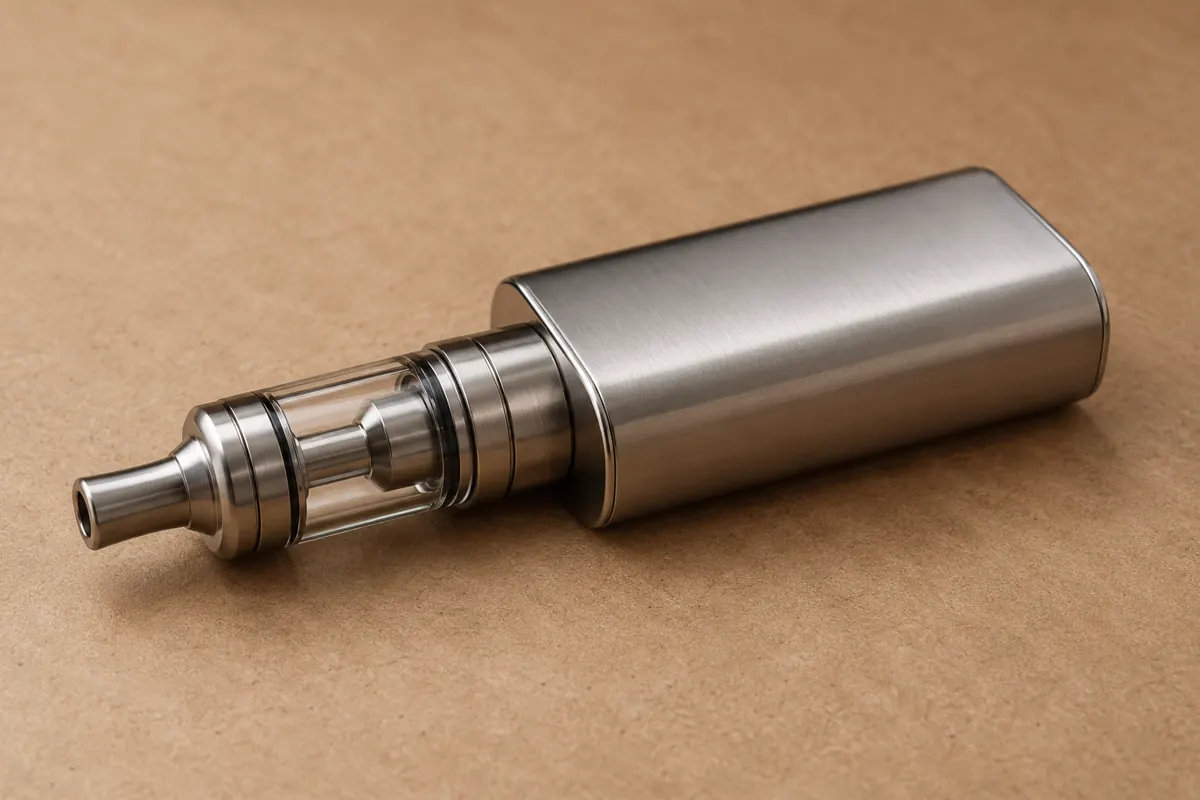
A two stage draw, a small device, a warm and concentrated vapour: that is the promise that brings most British vapers to MTL vaping in the first place. Behind a familiar gesture sits a precise piece of mechanics where coil, wattage and liquid all have to agree. Set up badly, it feels stifling and puts people off. Set up properly, it is discreet, frugal and remarkably durable.
MTL vaping in plain terms
MTL stands for mouth to lung. The vapour is drawn into the mouth, held for a moment, then inhaled. It is a two stage movement, and it produces a defined throat hit that the single stage inhale never quite matches.
The style rests on four pillars that hold together as a set. A deliberately tight draw, a coil above 1 ohm, modest wattage, and a liquid on the thinner side, richer in propylene glycol than in vegetable glycerine.
Change one of the four and the whole thing wobbles. That is why MTL vaping is best understood as a configuration rather than a technique, and why a kit sold as an MTL kit usually ships with all four already decided for you.
The hardware that defines a tight draw
A good result depends as much on the device as on the way you inhale. Every part of the setup pushes the sensation either towards the tight end or towards the airy one.
Coil resistance is the first marker. Staying above 1 ohm, and British listings commonly run from around 0.8 ohm upwards for this style, means less current, gentler heating and a vapour that is warm, discreet and dense in flavour. It is the exact inverse of a low resistance build designed for volume.
The air inlet finishes the job. On hardware built for a tight draw the inlet stays narrow, which is what creates the resistance you feel against the lips. Most kits offer an adjustable ring so you can fine tune the restriction, but an MTL tank never opens as far as a direct to lung one.
Why the UK market leans towards MTL vaping
This is where Britain diverges from other markets, and the reason has nothing to do with taste. Three regulatory ceilings apply at once, and all three point the same way.
A refillable tank or pod cannot hold more than 2 ml. Nicotine containing e-liquid cannot exceed 20 mg per ml. Bottles of nicotine containing liquid cannot exceed 10 ml. Those limits are fixed regardless of how you like to vape.
A 2 ml reservoir on a low resistance coil is emptied in a couple of hours, which turns a direct to lung setup into a refilling routine. The same 2 ml on a coil above 1 ohm covers most of a working day, because the style vaporises so little per puff. Frugality stops being a preference and becomes a practical requirement.
The nicotine ceiling works the same way. A strength near the legal cap is genuinely usable at MTL puff volumes and simply unpleasant at direct to lung volumes, where far more vapour reaches the lungs per draw. Between the tank cap and the strength cap, the British shelf is quietly built around the tight draw, which is why so many compact refillable pods dominate it.
The e-liquid that suits a tight draw
The liquid matters as much as the coil, and a mismatch spoils the experience quickly by saturating the cotton. MTL vaping wants a thinner liquid, weighted towards propylene glycol, which wicks properly into a small coil and sharpens the throat hit.
A thick, heavily glycerine based liquid struggles through a wick designed for lighter fluids. The coil goes dry, the flavour turns harsh and the part is spent long before it should be. This single mismatch accounts for most of the complaints attributed to poor hardware.
Nic salts sit naturally in this corner of the market. They were formulated for a smoother delivery at higher strengths, and higher strengths are only manageable when puff volume stays small, which is exactly what a tight draw produces. The three components, high resistance coil, PG heavy liquid and an appropriate strength, form a set you should not break apart.
Setting up and refining MTL vaping
Once the hardware is chosen, comfort comes down to a handful of adjustments. They are what separates a pleasant vape from a draw that feels like hard work.
Wattage sits within the range printed on the coil, low by design in this style. Too much power scorches the cotton and produces an acrid taste, too little leaves the vapour lukewarm and flat. The right setting is found by moving in single steps, not by jumping.
Airflow is then closed down to sharpen the throat hit or opened slightly to soften it. Our guide to vape airflow settings works through each symptom and the adjustment that answers it.
One detail gets overlooked and makes a real difference: the mouthpiece. A narrow bore drip tip concentrates the vapour and extends that tight, cigarette shaped draw, while a wide one dilutes it before it reaches the lips. It is the cheapest change available on a setup that regulation otherwise keeps fixed.
Who the tight draw actually suits
MTL vaping is not a beginner rung to be climbed off. It is a complete style, chosen for what it delivers rather than for what it leads to.
It suits the vaper who wants a familiar two stage gesture, discreet vapour, contained liquid use and hardware small enough to forget about. It also suits anyone who values concentrated flavour and a present throat hit over sheer volume.
Compared with direct to lung, it asks for less power, less liquid and a smaller battery, which makes it the sober end of the market. For the full comparison of the two families, our piece on MTL vs DTL lays out the criteria. And if you want a concrete reference point for what a genuinely tight draw feels like, the Justfog Q16 is the yardstick British vapers keep coming back to.
Frequently asked questions
Is a tight draw really the place to start?
It is often suggested at the outset because it asks for little power, little liquid and simple hardware, and the two stage gesture feels familiar. Nothing forces it, though. Style follows the sensation you are after, not a prescribed order.
Why does my tight draw setup taste burnt?
Usually the wattage sits above the range printed on the coil, or the cotton has run dry. Lowering the power, priming a new coil and letting it soak for a few minutes before the first puff resolves most cases. A liquid that is too thick can also starve a small coil.
Can I open the airflow on an MTL tank and vape direct to lung?
Opening the ring widens the draw a little, but hardware built for restriction keeps inlets too narrow and coils too high in resistance for a genuine direct to lung build. You end up with a semi open draw rather than a change of family. Dedicated hardware is the honest answer.
Does a tight draw give less flavour?
Quite the opposite in most cases. The vapour is warmer and less diluted by air, so aromas come through intense and precise. There is simply less of it than a direct to lung build produces. Volume and aromatic intensity are not the same measurement.
How long should a 2 ml pod last on this style?
Most people report a full day of moderate use, which is the practical advantage of the tight draw under British tank rules. Consumption varies with wattage, coil resistance and how often you reach for the device, so treat any figure as a rough marker rather than a promise.
Choosing the tight draw on purpose
MTL vaping has nothing default about it. It is a complete configuration, built for discretion, frugality and a two stage gesture, and it only works when a high resistance coil, a PG heavy liquid and a measured wattage are chosen together rather than one at a time.
In Britain it also happens to be the style the rules favour. With tanks capped at 2 ml, bottles at 10 ml and nicotine containing liquid at 20 mg per ml, the tight draw is the setup that copes best with the constraints every vaper here works under.
That coherence, from the gesture through to the final adjustment, is what Panorama Inhalation examines on every kit built around MTL vaping.
Editorial content for adult readers only. Vaping products usually contain nicotine, a substance that causes addiction. Not for sale to under-18s in the United Kingdom. This article is not a buying recommendation.
Keep reading
Justfog Q16: the benchmark tight MTL draw
What the Justfog Q16 draw teaches about MTL: bottom airflow, high resistance coils, fine adjustment and what changes for anyone arriving from DTL.
Your first vape kit: let the draw decide
Choosing a first vape kit: why the style of draw comes before the device, which formats serve MTL, and what UK rules now require of every kit sold.
Geekvape Aegis, which Aegis for which draw
Geekvape Aegis, from the Legend 5 to the Nano 3. Six models sorted by inhaling style, MTL, RDL or DTL, and the coils that actually set the draw.